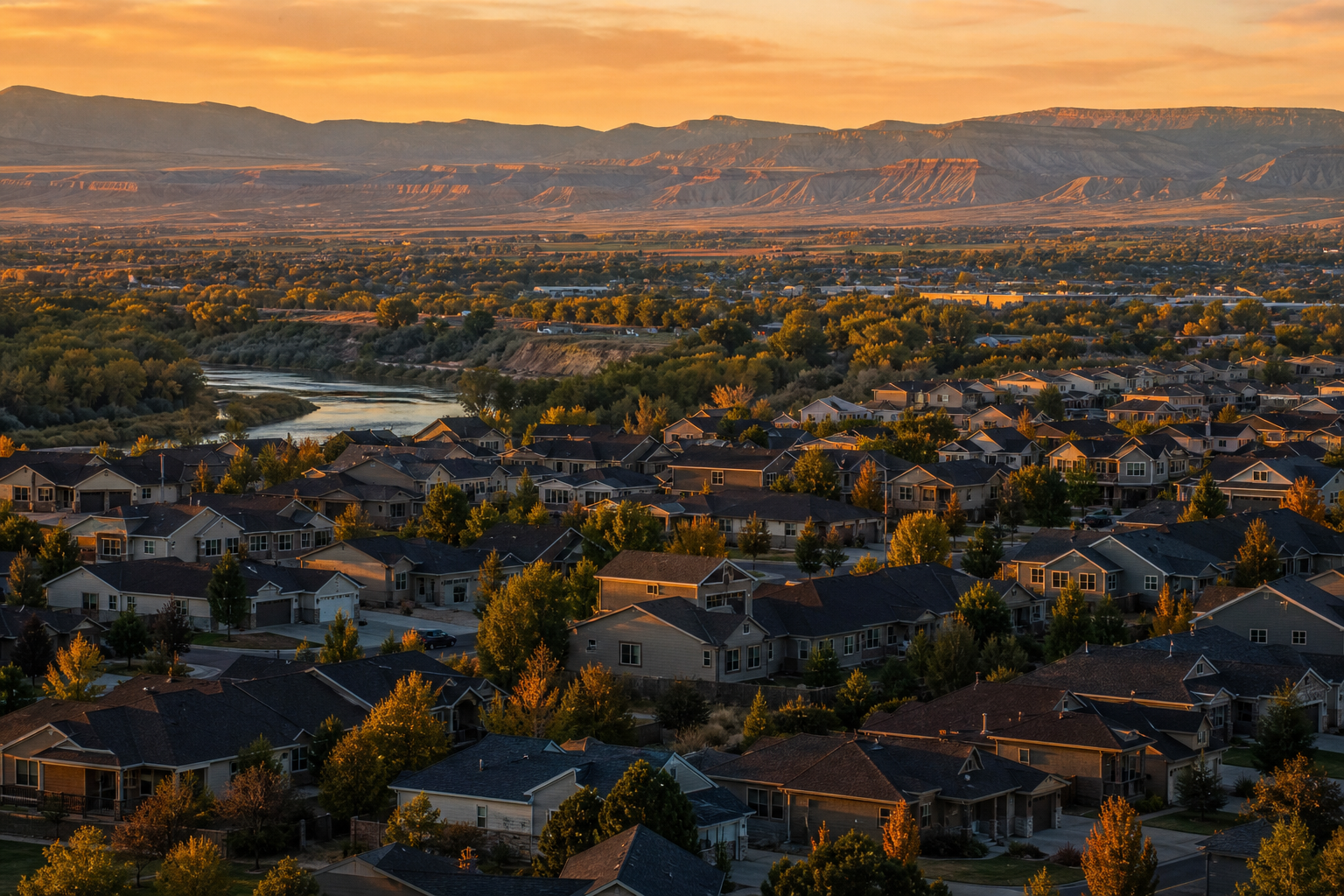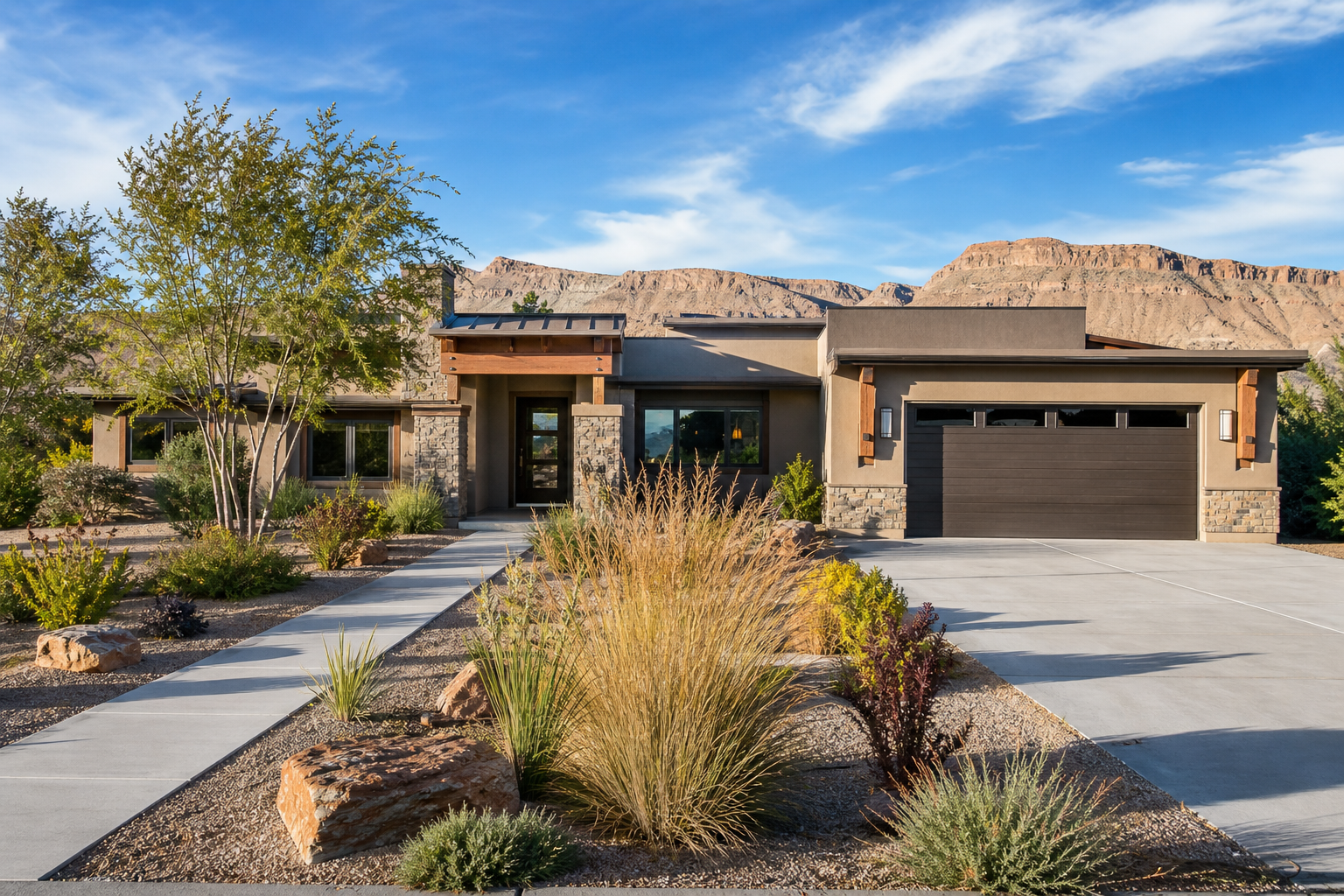


Selling a house in Grand Junction can work well in fall 2026, but the market has shifted. Inventory tops 1,000 listings countywide, median days on market runs 60-65 days, and buyers have real negotiating room. Sellers who price accurately and prepare well still close at strong prices.
Is now a good time to sell a house in Grand Junction?
Selling a house in Grand Junction in fall 2026 is still achievable at a strong price, but the market has shifted meaningfully from the low-inventory frenzy of recent years. Mesa County now carries over 1,000 active listings and 4.4 months of supply, the highest level since 2017, and the median home sits on the market for 60 to 65 days before closing. Sellers who price accurately, prepare their home well, and understand what buyers are comparing them against can still close at competitive numbers. Sellers who overprice or skip preparation will feel the difference.
Key Takeaways
- The median sale price in Mesa County reached $427,450 in August 2026, up 6.9% year over year, according to Colorado Biz.
- Median days on market ran 65 days in August 2026, plan for a marketing period measured in weeks, not days.
- Mesa County had 4.4 months of housing supply in August 2026, the highest level recorded since February 2017.
- Recent local market data puts the median sale price at $418,000 across trailing closings, with a median of 20 days on market for homes that moved. Those faster-closing homes reflect well-priced, well-prepared listings, not the full inventory picture.
- Pricing accuracy matters more now than it did in a tight seller’s market: with 1,000+ competing listings, an overpriced home sits while correctly priced homes move.
What does the Grand Junction market actually look like right now?
Let me give you the honest picture, because the data tells a nuanced story.
Prices are up. According to Colorado Biz, the median Mesa County sale price hit $427,450 in August 2026, a 6.9% increase from $400,000 in August 2025. That is real appreciation, and it means sellers are still walking away with more than they would have a year ago.
But the pace has slowed, and inventory has climbed. The same Colorado Biz report shows Mesa County hit over 1,000 active listings in September 2026 and 4.4 months of supply, the highest supply level the county has seen since February 2017. For context, a balanced market is typically around 4 to 6 months of supply, and anything under 3 months has historically favored sellers. We are squarely in balanced-to-buyer-leaning territory.
Median days on market in August 2026 reached 65 days, up from 59 days in August 2025. That is a real shift. A house in Grand Junction is not selling in a weekend anymore, at least not by default. The sellers who are moving quickly are the ones who came in priced right from day one.
Recent local market data shows a median sale price of $418,000 and a median of 20 days on market across trailing closings. That faster pace reflects the homes that actually closed, meaning the well-priced, well-prepared listings. The Colorado Biz county-level figures, which capture the full active inventory including homes sitting without offers, show the 60 to 65-day median that a new listing should realistically plan around. Both sets of numbers describe the same market from different angles.
Should you list your house in Grand Junction this fall?
Fall is a real selling window in Grand Junction. Unlike markets that go quiet after Labor Day, the Grand Valley tends to see motivated, serious buyers in the fall, people who need to move before year-end, relocating buyers on a timeline, and investors looking to close before December. The competition from other sellers also thins out compared to the spring surge, which can work in your favor if your home is well-positioned.
That said, the conditions right now do not provide the automatic leverage of a tight seller’s market. Buyers have more than 1,000 listings to compare across Mesa County, according to Colorado Biz. They are taking their time, the median marketing period reflects that. If your home is overpriced, they will simply move on to the next one.
Here is how I think about whether now makes sense for a specific seller:
- Is your home priced at or below what comparable sales support? In a higher-inventory environment, pricing accuracy is not optional, it is the single biggest factor in how fast you close and at what number.
- Is the home in showing-ready condition? Buyers comparing multiple listings will notice deferred maintenance, dated finishes, and poor presentation. The homes moving in 20 to 30 days are typically the ones that look the part.
- Do you have a real reason to sell now? If you are downsizing, relocating, settling an estate, or unlocking equity for another purpose, the market timing matters less than getting the process right. If you are testing the market with no urgency, the current conditions may not reward a casual listing.
- What is your price point? Homes under $500,000 continue to draw the broadest buyer pool in Mesa County, where financing eligibility, first-time buyers, and move-up buyers all converge. Homes above that threshold face a narrower buyer pool and, as the area data above shows, longer marketing periods on average.
According to Colorado Biz, Mesa County recorded 243 residential sales in June 2026, down 13.5% from June 2025, so sales volume has softened even as prices have held. That combination tells me buyers are selective, not absent. The demand is there; it just requires a house in Grand Junction to earn it rather than assume it.
What about waiting for a better market?
I hear this question a lot, and the honest answer is: it depends on what you are waiting for. If you are hoping for a return to 2021-era multiple-offer frenzy, that is not the trajectory the data suggests. The June 2026 report from Colorado Biz showed Mesa County’s highest June inventory since 2017 and highest June supply since 2014. That trend does not reverse overnight.
On the other hand, prices are still appreciating year over year. A seller who waits is not necessarily waiting for higher prices, they may simply be waiting for more competition from other sellers. Your specific situation, equity position, and timeline matter more than the abstract question of market timing. That is a conversation worth having before you decide either way.
The National Association of Realtors tracks national inventory and price trends that provide useful context, but Grand Junction’s dynamics, energy sector employment, Western Slope geography, and the specific buyer pool drawn to this region, mean local data always tells a more accurate story than national averages.
If you want to understand what your home would realistically sell for and how long it would likely take, a comparative market analysis is the right starting point. That is where your actual number comes from, not a countywide median and not an online estimate.
If you want to read what other Grand Junction sellers and buyers have experienced working with me, you can find my reviews on Google and Zillow.
Frequently Asked Questions
Is Grand Junction a seller’s market or a buyer’s market right now?
As of fall 2026, Grand Junction and Mesa County are in a balanced-to-buyer-leaning market. Mesa County had 4.4 months of housing supply in August 2026 and over 1,000 active listings in September 2026, the highest levels since 2017, giving buyers more choices and more negotiating room than they had in recent years. Prices are still appreciating year over year, so it is not a distressed market, but sellers no longer hold the automatic leverage of a tight inventory environment.
What is the median sale price for a home in Grand Junction in 2026?
The median Mesa County sale price reached $427,450 in August 2026, up 6.9% from $400,000 in August 2025, according to Colorado Biz. Recent local market data for the Grand Junction area puts the median closer to $418,000 across trailing closed sales. Individual home values vary significantly based on location, condition, property type, and neighborhood, a countywide or area median is a starting point, not a final number.
How long does it take to sell a house in Grand Junction?
Based on June through August 2026 county data, the median marketing period in Mesa County ran 60 to 65 days. Well-priced, well-prepared homes in strong locations can close faster, recent local closing data shows a median closer to 20 days for homes that moved. The spread between those two figures reflects the gap between homes priced accurately and homes that sat while buyers compared alternatives.
How many months of housing supply does Grand Junction have?
Mesa County had 4.4 months of supply in August 2026 and 3.8 months in June 2026, both the highest readings for those months since at least 2014-2017, according to Colorado Biz. A balanced market is generally considered to be 4 to 6 months of supply, so the county sits at the lower end of balanced, not a buyer’s market in the distressed sense, but meaningfully more competitive for sellers than the sub-2-month conditions of recent years.
Should I lower my asking price if my Grand Junction home is not getting offers?
If your home has been on the market for more than 30 days without serious offers, price is almost always a factor, especially in a market where buyers have over 1,000 listings to compare. A price reduction is not a failure; it is a recalibration to where the market actually is. The longer an overpriced home sits, the more negotiating leverage shifts to the buyer. I walk sellers through this analysis before we list so we can price it right from the start rather than chase the market down.
The bottom line on selling a house in Grand Junction
The Grand Junction market in fall 2026 rewards preparation and accurate pricing, and it punishes wishful thinking. Prices are still up year over year, buyers are still active, and well-positioned homes are still closing. But the days of listing anything at any price and waiting for offers to roll in are behind us for now.
If you are thinking about selling, the most useful thing you can do right now is get a clear-eyed look at what your home is actually worth in today’s market and what it would take to compete. That is exactly what I do for sellers across Grand Junction and Mesa County.
Call or text me today for a private consultation, no pressure, just a real conversation about your situation. Or, if you want a starting point before we talk, get a free home valuation here.
Equal Housing Opportunity. Bill Needham is licensed in Colorado as an Associate Broker, regulated by the Colorado Division of Real Estate. This article is general market information only and does not constitute legal, tax, or financial advice. Confirm your own numbers with your title company, tax advisor, or lender.